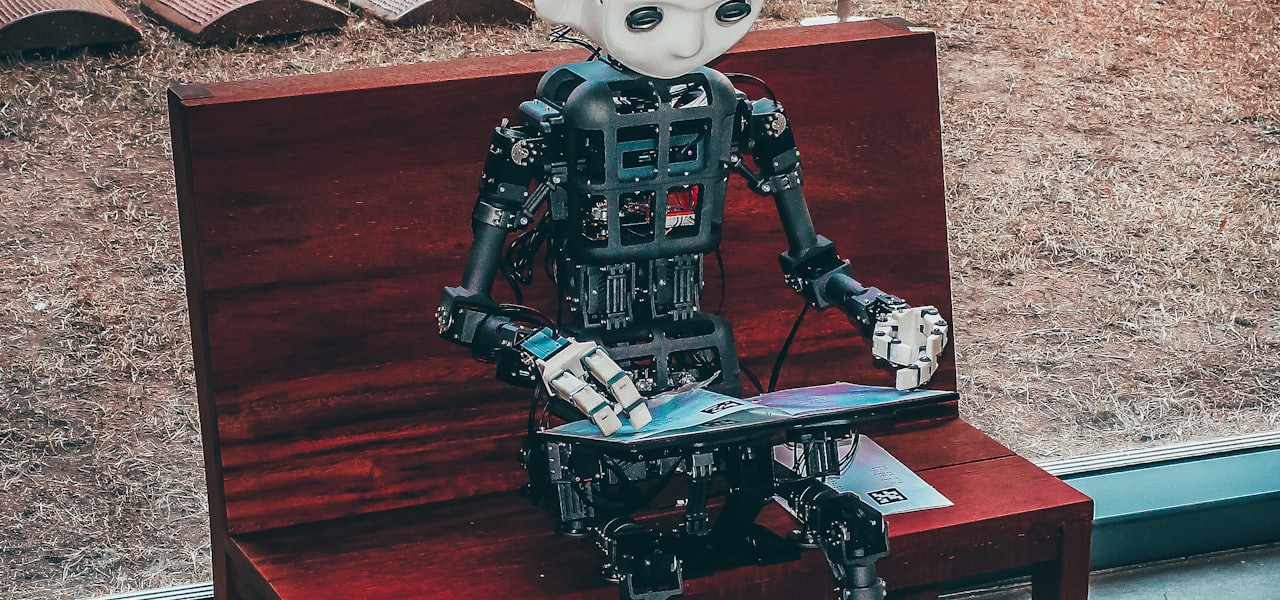
Non-human (also spelled nonhuman) is any entity displaying some, but not enough, human characteristics to be considered a human. The term has been used in a variety of contexts and may refer to objects that have been developed with human intelligence, such as robots or vehicles. == Organisms == === Animal rights and personhood === In the animal rights movement, it is common to distinguish between "human animals" and "non-human animals". Participants in the animal rights movement generally recognize that non-human animals have some similar characteristics to those of human persons. For example, various non-human animals have been shown to register pain, compassion, memory, and some cognitive function. Some animal rights activists argue that the similarities between human and non-human animals justify giving non-human animals rights that human society has afforded to humans, such as the right to self-preservation, and some even wish for all non-human animals or at least those that bear a fully thinking and conscious mind, such as vertebrates and some invertebrates such as cephalopods, to be given a full right of personhood. === The non-human in philosophy === Contemporary philosophers have drawn on the work of Henri Bergson, Gilles Deleuze, Félix Guattari, and Claude Lévi-Strauss (among others) to suggest that the non-human poses epistemological and ontological problems for humanist and post-humanist ethics, and have linked the study of non-humans to materialist and ethological approaches to the study of society and culture. == Software and robots == The term non-human has been used to describe computer programs and robot-like devices that display some human-like characteristics. In both science fiction and in the real world, computer programs and robots have been built to perform tasks that require human-computer interactions in a manner that suggests sentience and compassion. There is increasing interest in the use of robots in nursing homes and to provide elder care. Computer programs have been used for years in schools to provide one-on-one education with children. The Tamagotchi toy required children to provide care, attention, and nourishment to keep it "alive".
Deep image compositing
Deep image compositing is a way of compositing and rendering digital images that emerged in the mid-2010s. In addition to the usual color and opacity channels a notion of spatial depth is created. This allows multiple samples in the depth of the image to make up the final resulting color. This technique produces high quality results and removes artifacts around edges that could not be dealt with otherwise. == Deep data == Deep data is encoded by advanced 3D renderers into an image that samples information about the path each rendered pixel takes along the z axis extending outward from the virtual camera through space, including the color and opacity of every non-opaque surface or volume it passes through along the way, as well as neighboring samples. It might be considered somewhat analogous to the way ray tracing generates simulated photon paths through such mediums; however, ray tracing and other traditional rendering techniques generally produce images that contain only three or four channels of color and opacity values per pixel, flattened into a two dimensional frame. Depth maps, on the other hand, contain z axis information encoded in a grayscale image. Each level of gray represents a different slice of the z space. The "thickness" of each slice is determined at time of render, allowing for more or less depth fidelity depending on how deep the scene is. Depth maps have been a boon to compositors for blending 3D renders with live action and practical elements. To be useful, the map must have high enough bit depth to encode separation between close-to-camera objects and objects near infinity. Most 3D software packages are now capable of generating 16-bit and 32-bit depth maps, providing up to 2 billion depth levels. Depth maps do not however include transparency information about non-opaque surfaces or volumes and as such, objects beyond and viewed through these semi- or fully-transparent objects will have no depth information of their own and may not get composited or blurred correctly. Even the popular addition of cryptomattes to many post-production and VFX studios' pipelines, while providing separate color-coded ID shapes for individual elements in a rendered scene to further bridge the gap between CGI and compositing, don't allow for the nearly automated and fully non-linear workflows that deep data does. This is because deep images encapsulate enough 3D information that normally time-intensive tasks such as rotoscoping with numerous holdout mattes for complex interactions between moving characters and semi-transparent environmental volumes like smoke or water, are essentially trivial. Instead of going through that process, multiple mattes could easily be generated from a single set of deep images with no need to re-render every matte element and background for each case. In addition to that efficiency and flexibility, deep data images inherently provide much higher visual quality in common areas that have been difficult with traditional renders, such as the motion-blurred edges of characters with semi-transparent elements like hair. One downside to the use of deep images is their substantial file size, since they encode a relatively enormous amount of data per frame compared to even multichannel formats such as OpenEXR. === Function-based (integrated) === The data is stored as a function of depth. This results in a function curve that can be used to look up the data at any arbitrary depth. Manipulating the data is harder. === Sample-based (deintegrated) === Each sample is considered as an independent piece and can so be manipulated easily. To make sure the data is representing the right detail, an additional expand value needs to be introduced. == Generating deep data == 3D renderers produce the necessary data as a part of the rendering pipeline. Samples are gathered in depth and then combined. The deep data can be written out before this happens and so is nothing new to the process. Generating deep data from camera data needs a proper depth map. This is used in a couple of cases but still not accurate enough for detailed representation. For basic holdout task this can be sufficient though. == Compositing deep data images == Deep images can be composited like regular images. The depth component makes it easier to determine the layering order. Traditionally this had to be input by the user. Deep images have that information for themselves and need no user input. Edge artifacts are reduced as transparent pixels have more data to work with. == History == Deep Images have been around in 3D rendering packages for quite a while now. The use of them for holdouts was first done at several VFX houses in shaders. Holdout mattes can be generated at render time. Using them in a more interactive manner was started recently by several companies, SideFX integrated it in their Houdini software and facilities like Industrial Light & Magic, DreamWorks Animation, Weta, AnimalLogic and DRD studios have implemented interactive solutions. In 2014 the Academy of Motion Picture Arts and Sciences honored the technology with its annual SciTech awards. Dr. Peter Hillman for the long-term development and continued advancement of innovative, robust and complete toolsets for deep compositing and to Colin Doncaster, Johannes Saam, Areito Echevarria, Janne Kontkanen and Chris Cooper for the development, prototyping and promotion of technologies and workflows for deep compositing. == Resources == Pixar Paper Deep Image Paper Video tutorial of Deep Imaging as used on 2012 film Rise of the Planet of the Apes, Nuke compositing software Deep Compositing Course Deep Image File Format at Google Code Academy Award for the Technology Theory of Deep Pixels OpenEXR Deep Pixels
Scale space
Scale-space theory is a framework for multi-scale signal representation developed by the computer vision, image processing and signal processing communities with complementary motivations from physics and biological vision. It is a formal theory for handling image structures at different scales, by representing an image as a one-parameter family of smoothed images, the scale-space representation, parametrized by the size of the smoothing kernel used for suppressing fine-scale structures. The parameter t {\displaystyle t} in this family is referred to as the scale parameter, with the interpretation that image structures of spatial size smaller than about t {\displaystyle {\sqrt {t}}} have largely been smoothed away in the scale-space level at scale t {\displaystyle t} . The main type of scale space is the linear (Gaussian) scale space, which has wide applicability as well as the attractive property of being possible to derive from a small set of scale-space axioms. The corresponding scale-space framework encompasses a theory for Gaussian derivative operators, which can be used as a basis for expressing a large class of visual operations for computerized systems that process visual information. This framework also allows visual operations to be made scale invariant, which is necessary for dealing with the size variations that may occur in image data, because real-world objects may be of different sizes and in addition the distance between the object and the camera may be unknown and may vary depending on the circumstances. == Definition == The notion of scale space applies to signals of arbitrary numbers of variables. The most common case in the literature applies to two-dimensional images, which is what is presented here. Consider a given image f {\displaystyle f} where f ( x , y ) {\displaystyle f(x,y)} is the greyscale value of the pixel at position ( x , y ) {\displaystyle (x,y)} . The linear (Gaussian) scale-space representation of f {\displaystyle f} is a family of derived signals L ( x , y ; t ) {\displaystyle L(x,y;t)} defined by the convolution of f ( x , y ) {\displaystyle f(x,y)} with the two-dimensional Gaussian kernel g ( x , y ; t ) = 1 2 π t e − ( x 2 + y 2 ) / 2 t {\displaystyle g(x,y;t)={\frac {1}{2\pi t}}e^{-(x^{2}+y^{2})/2t}\,} such that L ( ⋅ , ⋅ ; t ) = g ( ⋅ , ⋅ ; t ) ∗ f ( ⋅ , ⋅ ) , {\displaystyle L(\cdot ,\cdot ;t)\ =g(\cdot ,\cdot ;t)f(\cdot ,\cdot ),} where the semicolon in the argument of L {\displaystyle L} implies that the convolution is performed only over the variables x , y {\displaystyle x,y} , while the scale parameter t {\displaystyle t} after the semicolon just indicates which scale level is being defined. This definition of L {\displaystyle L} works for a continuum of scales t ≥ 0 {\displaystyle t\geq 0} , but typically only a finite discrete set of levels in the scale-space representation would be actually considered. The scale parameter t = σ 2 {\displaystyle t=\sigma ^{2}} is the variance of the Gaussian filter and as a limit for t = 0 {\displaystyle t=0} the filter g {\displaystyle g} becomes an impulse function such that L ( x , y ; 0 ) = f ( x , y ) , {\displaystyle L(x,y;0)=f(x,y),} that is, the scale-space representation at scale level t = 0 {\displaystyle t=0} is the image f {\displaystyle f} itself. As t {\displaystyle t} increases, L {\displaystyle L} is the result of smoothing f {\displaystyle f} with a larger and larger filter, thereby removing more and more of the details that the image contains. Since the standard deviation of the filter is σ = t {\displaystyle \sigma ={\sqrt {t}}} , details that are significantly smaller than this value are to a large extent removed from the image at scale parameter t {\displaystyle t} , see the following figures and for graphical illustrations. === Why a Gaussian filter? === When faced with the task of generating a multi-scale representation one may ask: could any filter g of low-pass type and with a parameter t which determines its width be used to generate a scale space? The answer is no, as it is of crucial importance that the smoothing filter does not introduce new spurious structures at coarse scales that do not correspond to simplifications of corresponding structures at finer scales. In the scale-space literature, a number of different ways have been expressed to formulate this criterion in precise mathematical terms. The conclusion from several different axiomatic derivations that have been presented is that the Gaussian scale space constitutes the canonical way to generate a linear scale space, based on the essential requirement that new structures must not be created when going from a fine scale to any coarser scale. Conditions, referred to as scale-space axioms, that have been used for deriving the uniqueness of the Gaussian kernel include linearity, shift invariance, semi-group structure, non-enhancement of local extrema, scale invariance and rotational invariance. In the works, the uniqueness claimed in the arguments based on scale invariance has been criticized, and alternative self-similar scale-space kernels have been proposed. The Gaussian kernel is, however, a unique choice according to the scale-space axiomatics based on causality or non-enhancement of local extrema. === Alternative definition === Equivalently, the scale-space family can be defined as the solution of the diffusion equation (for example in terms of the heat equation), ∂ t L = 1 2 ∇ 2 L , {\displaystyle \partial _{t}L={\frac {1}{2}}\nabla ^{2}L,} with initial condition L ( x , y ; 0 ) = f ( x , y ) {\displaystyle L(x,y;0)=f(x,y)} . This formulation of the scale-space representation L means that it is possible to interpret the intensity values of the image f as a "temperature distribution" in the image plane and that the process that generates the scale-space representation as a function of t corresponds to heat diffusion in the image plane over time t (assuming the thermal conductivity of the material equal to the arbitrarily chosen constant 1/2). Although this connection may appear superficial for a reader not familiar with differential equations, it is indeed the case that the main scale-space formulation in terms of non-enhancement of local extrema is expressed in terms of a sign condition on partial derivatives in the 2+1-D volume generated by the scale space, thus within the framework of partial differential equations. Furthermore, a detailed analysis of the discrete case shows that the diffusion equation provides a unifying link between continuous and discrete scale spaces, which also generalizes to nonlinear scale spaces, for example, using anisotropic diffusion. Hence, one may say that the primary way to generate a scale space is by the diffusion equation, and that the Gaussian kernel arises as the Green's function of this specific partial differential equation. == Motivations == The motivation for generating a scale-space representation of a given data set originates from the basic observation that real-world objects are composed of different structures at different scales. This implies that real-world objects, in contrast to idealized mathematical entities such as points or lines, may appear in different ways depending on the scale of observation. For example, the concept of a "tree" is appropriate at the scale of meters, while concepts such as leaves and molecules are more appropriate at finer scales. For a computer vision system analysing an unknown scene, there is no way to know a priori what scales are appropriate for describing the interesting structures in the image data. Hence, the only reasonable approach is to consider descriptions at multiple scales in order to be able to capture the unknown scale variations that may occur. Taken to the limit, a scale-space representation considers representations at all scales. Another motivation to the scale-space concept originates from the process of performing a physical measurement on real-world data. In order to extract any information from a measurement process, one has to apply operators of non-infinitesimal size to the data. In many branches of computer science and applied mathematics, the size of the measurement operator is disregarded in the theoretical modelling of a problem. The scale-space theory on the other hand explicitly incorporates the need for a non-infinitesimal size of the image operators as an integral part of any measurement as well as any other operation that depends on a real-world measurement. There is a close link between scale-space theory and biological vision. Many scale-space operations show a high degree of similarity with receptive field profiles recorded from the mammalian retina and the first stages in the visual cortex. In these respects, the scale-space framework can be seen as a theoretically well-founded paradigm for early vision, which in addition has been thoroughly tested by algorithms and experiments. == Gaussian derivatives == At any scale in scale space, we c
Apertus (LLM)
Apertus is a public large language model, developed by the Swiss AI Initiative (a collaboration between EPFL, ETH Zurich, and the Swiss National Supercomputing Centre). It was released on September 2, 2025, under the free and open-source Apache 2.0 license. Designed initially for business and research use cases around the world, Apertus was trained on over 1800 languages, and comes in 8 billion or 70 billion parameter versions and is available on Hugging Face for download. The model was developed aiming to adhere to European copyright law, and is one of the first examples of AI as a public good in the vein of AI Sovereignty. It is also the first large model to comply with the European Union's Artificial Intelligence Act. At its launch, the model creators emphasized multilinguality, transparency, and auditability as priorities in contrast to commercial frontier model. While international reception was largely positive, the first iteration was significantly behind the capabilities of frontier models and needs adaptation for many use cases with chatbots being a secondary but not a primary use case. As of late 2025, it was considered the largest and most capable fully open model. The capability of future models will depend in part on how much more funding can be secured.
IruSoft
IruSoft (Arabic: آيروسوفت) is an insurance regulatory platform designated for licensing, supervision and inspection of the insurance sector within a country. The platform introduced unique supervision-technology (suptech), insurance-technology (insurtech) and regulatory-technology (regtech) automated modules by which a regulator requires less resources to ensure fairness, transparency and competition and to prevent conflicts of interest in the sector. IruSoft was founded by Abdullah Al-Salloum and owned by the Insurance Regulatory Unit in Kuwait. The Insurance Regulatory Unit optimized processing insurance-sector's customer complaints by issuing Resolution No. (1) of 2022 that introduced IruSoft's complaints public module; an automated resolution center, by which the process of receiving submitted complaints, passing them on to the platforms of licensed insurance companies, tracking matter-related discussions and updates and getting them escalated if unresolved to be discussed by a committee assigned by the unit is integrally automated and analyzed for better key performance indicators.
Amaryllo
Amaryllo Inc. is a multinational company founded in Amsterdam, the Netherlands, and now headquartered in the United States. It operates as a cloud service platform, providing cloud storage and cloud computing solutions to enterprises and brand companies. Amaryllo began with Skype IP camera development, pioneering biometric robotic technologies, encrypted P2P network, and secure cloud storage. Amaryllo was founded by Band of Angels member, Marcus Yang to develop patents for a new type of robotic cameras that is claimed to "talk, hear, sense, recognize human faces, and track intruders". It also claims to have made the world's first security robot based on the WebRTC protocol, Icam PRO FHD, and won the 2015 CES Best of Innovation Award under Embedded Technology category. Its home security robots claim to employ 256-bit encryption and run on the WebRTC protocol. Amaryllo products are sold in over 100 Countries across 6 Continents. == History == Amaryllo revealed its first smart home security products at Internationale Funkausstellung Berlin (IFA) 2013 with a Skype-enabled IP camera called iCam HD. Amaryllo announced its second Skype-certified smart home product, iBabi HD, at CES 2014. The company was chosen as a "Cool Vendor" by Gartner in Connected Home 2014. Amaryllo introduced WebRTC-based smart home products after Microsoft terminated embedded Skype services in mid 2014. Since then, Amaryllo has been developing camera robots with auto-tracking and facial recognition technologies. Its camera robots, ATOM AR3 and ATOM AR3S, were introduced in late 2016. It focuses on wired and wireless technology based on AI services. == Cloud Service Platform == Amaryllo offers prepaid cloud storage through digital codes and gift cards, distributed via InComm Payments, Blackhawk Network, and other partners. It provides high-performance cloud computing service through Rescale partnership. Amaryllo provides free cameras under an annual cloud storage subscription on its website. == Global Supercomputing Network (GSN) == The Global Supercomputing Network (GSN) is a distributed high-performance computing (HPC) platform developed by Amaryllo. The network is designed to provide scalable Infrastructure as a Service (IaaS) by connecting a global array of data centers to offer GPU computing resources for specialized industrial and scientific applications. === Architecture and Technology === GSN operates as a decentralized distributed network of servers rather than a single centralized supercomputer. The platform integrates an artificial intelligence assistant named Genie, also developed by Amaryllo. Genie's primary function is to manage computing allocation, helping users identify and connect to available resources across the network’s various nodes based on the specific requirements of their tasks. === Services === The network primarily focuses on the rental of GPU processing resources, catering to fields that require massive parallel processing capabilities, including: Artificial Intelligence and Machine Learning: Training large language models (LLMs) and neural networks. Scientific Simulations: Executing complex calculations in physics, chemistry, and bioinformatics. Data Analytics: Processing large-scale datasets. By utilizing a rental model, GSN allows organizations to access high-end hardware without the capital expenditure associated with purchasing and maintaining physical server infrastructure. === Infrastructure and Partnerships === The network’s physical footprint is expanded through strategic partnerships with data center operators. GSN collaborates with MettaDC and Cyber DC to provide colocation services. These partnerships facilitate the deployment of Nvidia server clusters within secure, Tier-rated facilities, ensuring high availability and connectivity for GSN users. == Official Brand Licensee of HP == Amaryllo Inc. is an official licensee of HP Inc., managing both B2B and B2C cloud services under the HP brand. Through this partnership, Amaryllo offers a range of secure and scalable cloud solutions, including HP Cloud, which provides subscription and one-time payment storage for reliable data backup and storage for individuals, families, and businesses. HP Cloud employs cloud computing technologies to create smart albums for users.
Night Sky (app)
Night Sky (app) is an application developed and published by indie studio iCandi Apps Ltd. from the UK. Night Sky is a stargazing reference app, where the user can explore a virtual representation of the night sky to identify stars, planets, constellations and satellites. The app is developed specifically for iOS, tvOS and watchOS devices. Night Sky was first released on November 1, 2011 for iOS, and has had multiple updates since launch. Night Sky was mentioned in the September 2016 Apple Keynote during the Apple Watch Series 2 announcement. In October 2016, Night Sky was featured as the Free App of The Week on the Apple App Store. == Reception == Night Sky was featured in Apple's 'Best of 2012' and has also been pre-installed onto iPads in Apple retail stores worldwide.